
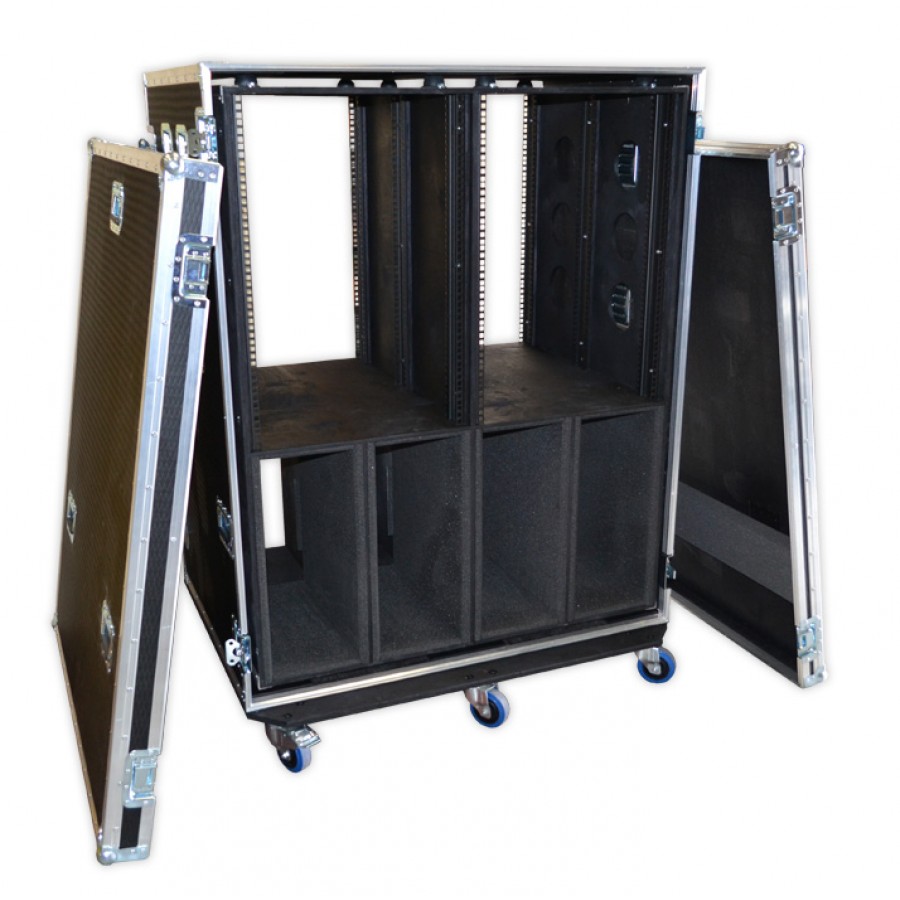
Rackmount Flight Cases Style
Rackmount flight cases are designed for equipment such as servers, amplifiers, control systems, and rack-mounted devices, built to fit within standard rack systems most commonly the 19-inch rack format used across audio, IT, and broadcast industries. The defining feature of this case type is the internal rack frame, which allows equipment to be securely mounted using standard unit measurements (U sizes) also referred to as rack units (RU).
While the 19” rack width is standard across the industry, the depth of equipment can vary significantly, which is where flexibility in design becomes essential. Different systems require different internal depths, clearances, and cable management space. This is where a bespoke approach makes a real difference, ensuring equipment fits correctly, operates efficiently, and remains fully protected during transport and use.
Some designs include fixed racks, while others incorporate shock-mounted systems to minimise vibration and impact particularly important for sensitive electronics. These cases typically offer access from both the front and rear, allowing for easy installation, maintenance, and operation without removing the equipment.
Rackmount flight cases are widely used in professional environments where equipment needs to remain securely installed, well-organised, and ready for immediate use, both in transit and on-site.
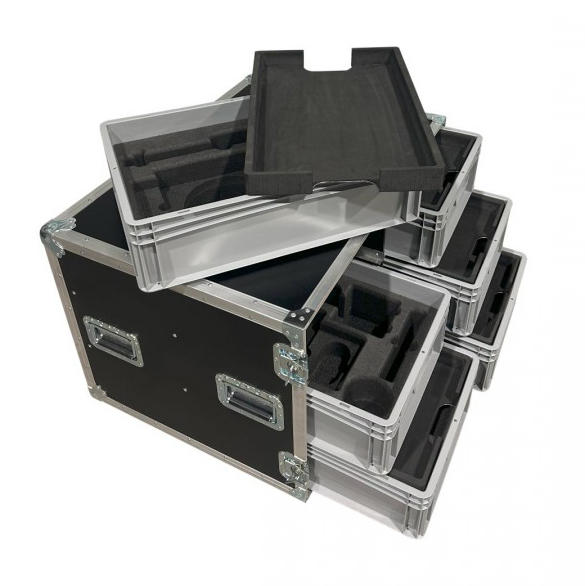
Tool Box Flight Cases Style
Toolbox-style flight cases are designed for organised storage, durability, and ease of access, making them a practical solution for transporting tools, equipment, and technical kits. Commonly used across industries such as engineering, events, maintenance, and backstage environments, this style allows for flexible internal layouts rather than fixed installations.
A key advantage of this style is the level of customisation available. Internal layouts can be tailored with drawers, divisions, foam lining, or open storage areas depending on the intended use. Drawer configurations are not fixed depth, height, and load capacity can all be adjusted, with heavy-duty runners capable of supporting substantial weight. Additional features such as front and rear access, cable flaps, and removable sections can also be incorporated where required.
Beyond internal layouts, the overall design can be adapted to improve functionality on-site. For example, lids can be engineered to double as work surfaces or tables with fold-out legs. Castors, handles, and structural elements are positioned based on how the case will be used in real working environments.
Manufactured in-house using high-quality birch plywood with a durable laminated finish, these cases are built for strength, longevity, and a clean professional appearance. With advanced manufacturing capabilities, the possibilities for configuration are extensive, allowing each case to be shaped around practical use rather than a standard format.
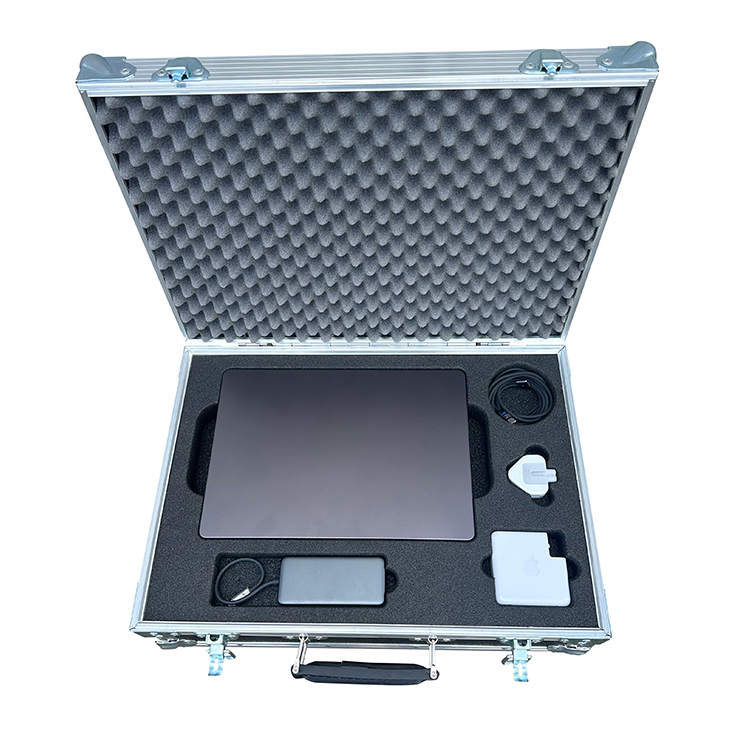
Briefcase Flight Cases Style
Slim-line and lightweight, briefcase-style flight cases are designed to offer both portability and protection for smaller, valuable equipment. Their format follows the principle of a traditional briefcase compact, easy to carry, and practical for everyday handling.
This style is most used for equipment that is not excessively heavy, typically suited to weights similar to standard luggage handling (max around 20–23kg). The focus is on ease of transport, allowing the case to be comfortably carried by hand while still providing reliable protection during transit.
Briefcase flight cases can be built to accommodate a wide range of items, including laptops, electronic components, prototype models, and specialist tools. Internally, they can feature anything from simple compartments to precision-cut foam inserts, depending on the level of protection and organisation required.
While designed primarily for portability, these cases can be adapted for heavier contents if needed. Additional handles, including side-mounted options, can be incorporated to improve handling. Handle types can also vary, from fixed carry handles to spring-loaded (recessed) handles, depending on preference and use.
Further practical features such as stacking corners can be added, allowing multiple cases to be safely stacked during storage or transport. Although sizes can vary in width and depth, the design typically prioritises ease of carrying and compact form.
Constructed with precision using advanced in-house machinery, briefcase flight cases can also include bespoke elements such as engraved logos or custom branding, combining protection with a clean and professional presentation.
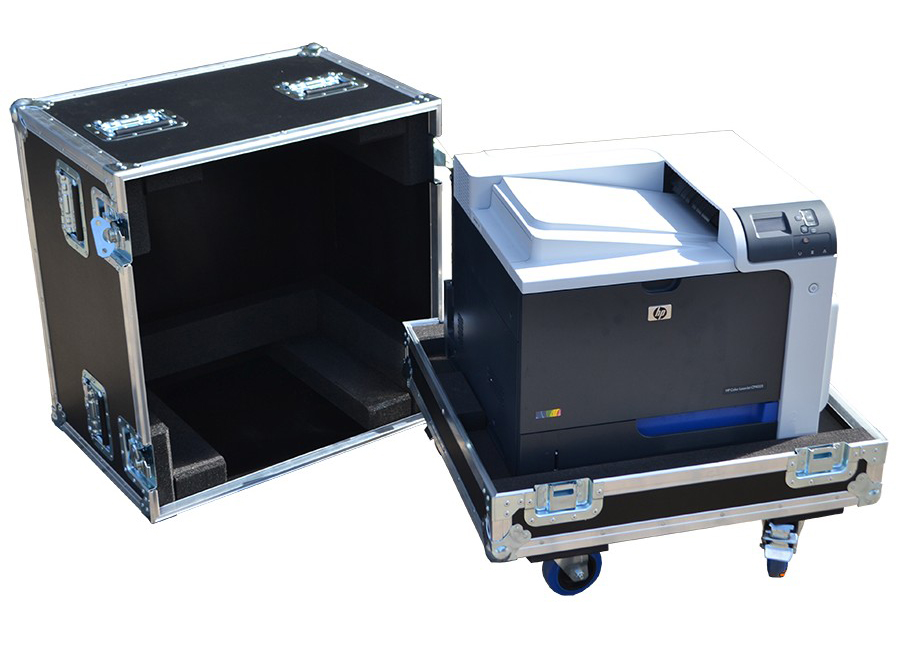
Tray & Lid Flight Case
Workstation Flight Cases
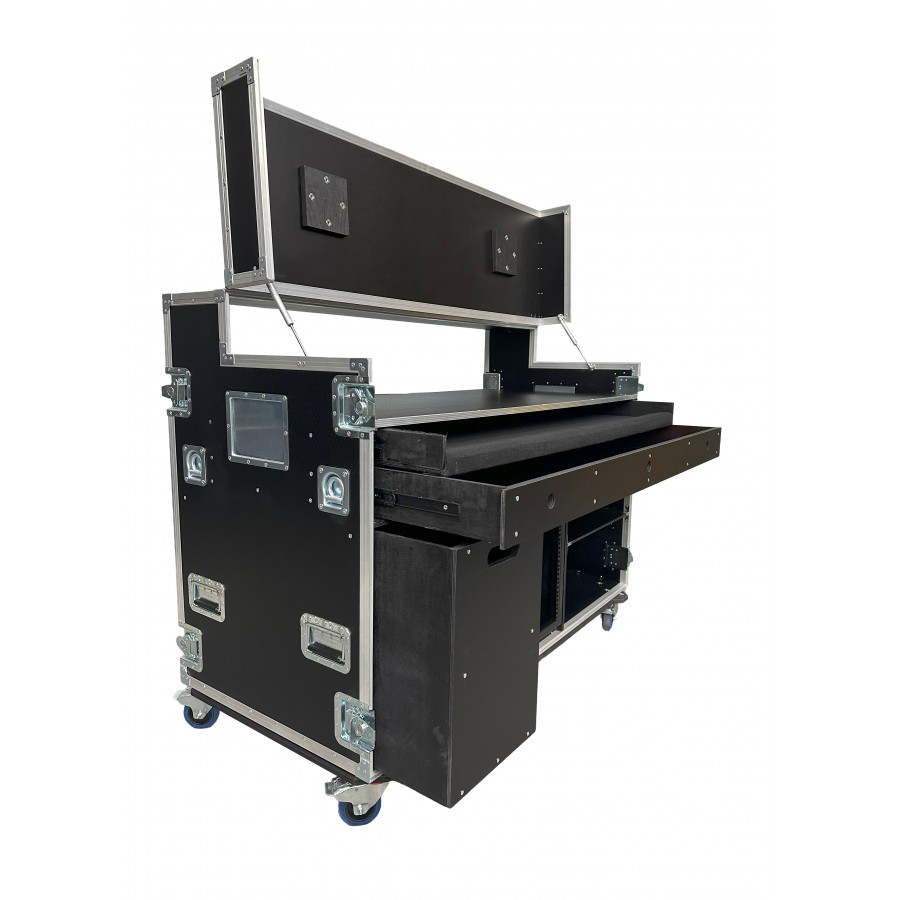
Workstation flight cases are designed to combine transport, protection, and on-site functionality in one complete solution. Unlike other cases, this style transforms from a protective transport unit into a fully usable workstation within minutes, making it ideal for live events, production environments, and technical setups.
Internally, these cases often include sliding shelves, pull-out trays, and dedicated equipment bays, allowing gear to remain installed and ready for use. The design supports both accessibility and workflow, reducing setup time and keeping everything in one integrated system.
Due to their purpose, workstation cases are typically built to handle heavier equipment and more complex setups. Heavy-duty castors, reinforced structures, and strategically positioned handles ensure they can be moved safely while maintaining stability during operation.
Customisation plays a significant role in this style. Layouts can be adapted to include rack sections, storage compartments, cable management systems, and operator-friendly working heights. Every element is designed around how the workstation will be used in real conditions.
Workstation flight cases are widely used in industries such as audio production, live events, broadcasting, DJ setups, and technical control environments, where efficiency, protection, and quick deployment are essential.
Road Trunk Style
Aluminium Rigidised Cases
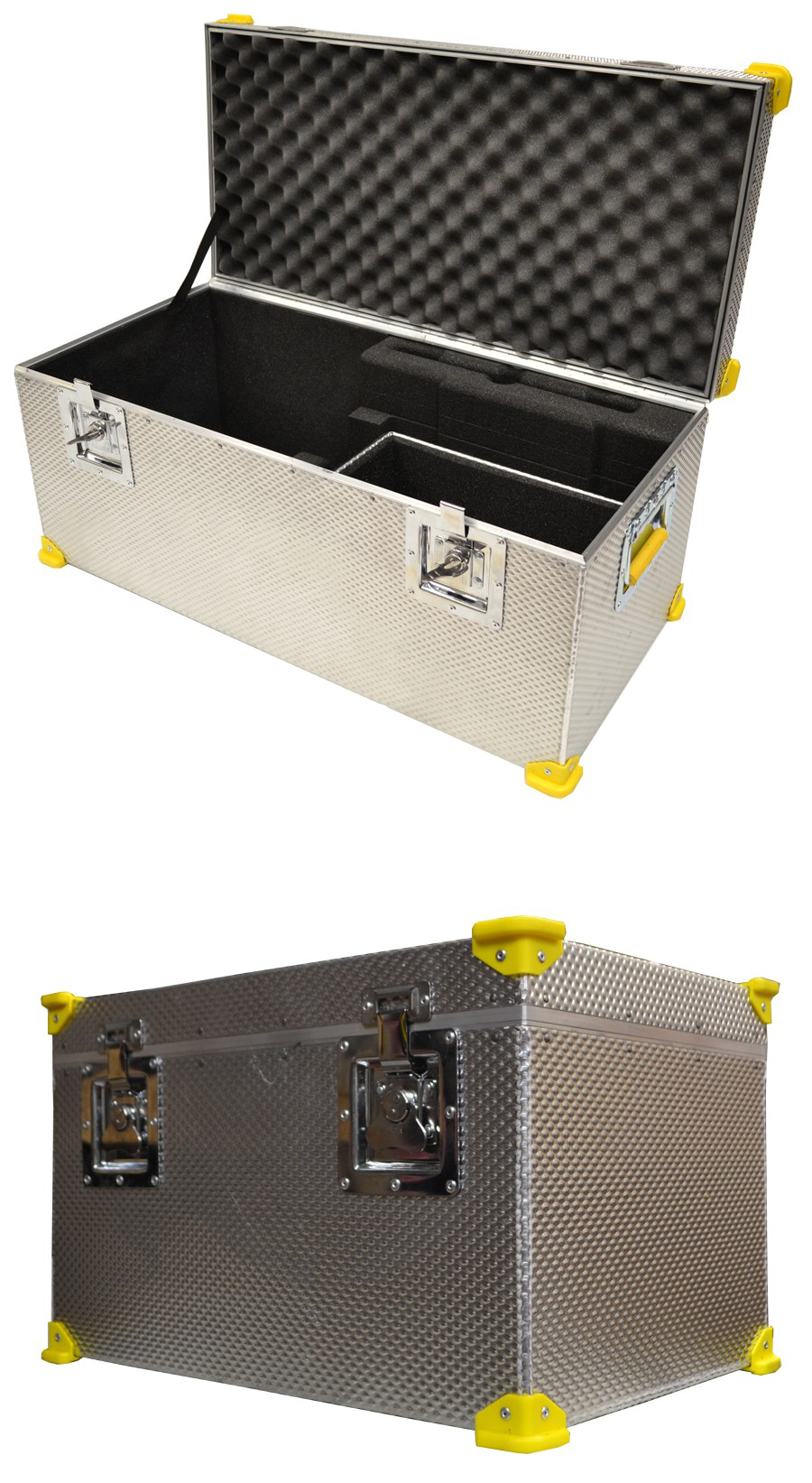
Our aluminium rigidised cases are designed for customers who need a reliable, lightweight solution with a clean, professional finish. Although they can be manufactured in formats like briefcase or trunk-style cases, this range is defined by its distinct aluminium construction and textured surface, which sets it apart from traditional flight cases but also helps reduce overall weight without compromising durability.
Aluminium rigidised cases are widely selected across different industries due to their practical, strength, durability and reduced weight:
- Aluminium panels provide solid protection while keeping the case easier to carry and handle.
- The rigidised pattern helps minimise visible marks from handling and improves overall durability.
- Naturally resistant to corrosion. Suitable for long-term use in a variety of environments.
- Commonly paired with foam inserts or internal divisions to keep contents secure and organised.
Aluminium rigidised cases are often chosen for technical and electronic equipment, medical and diagnostic devices, tools and specialist instruments, demonstration and presentation kits, equipment requiring organised, protective storage
Rather than being limited to a single case style, aluminium rigidised cases are selected for the properties of the material itself. This allows them to be adapted across multiple formats while maintaining a consistent look and level of protection.